not every feeling should become a message
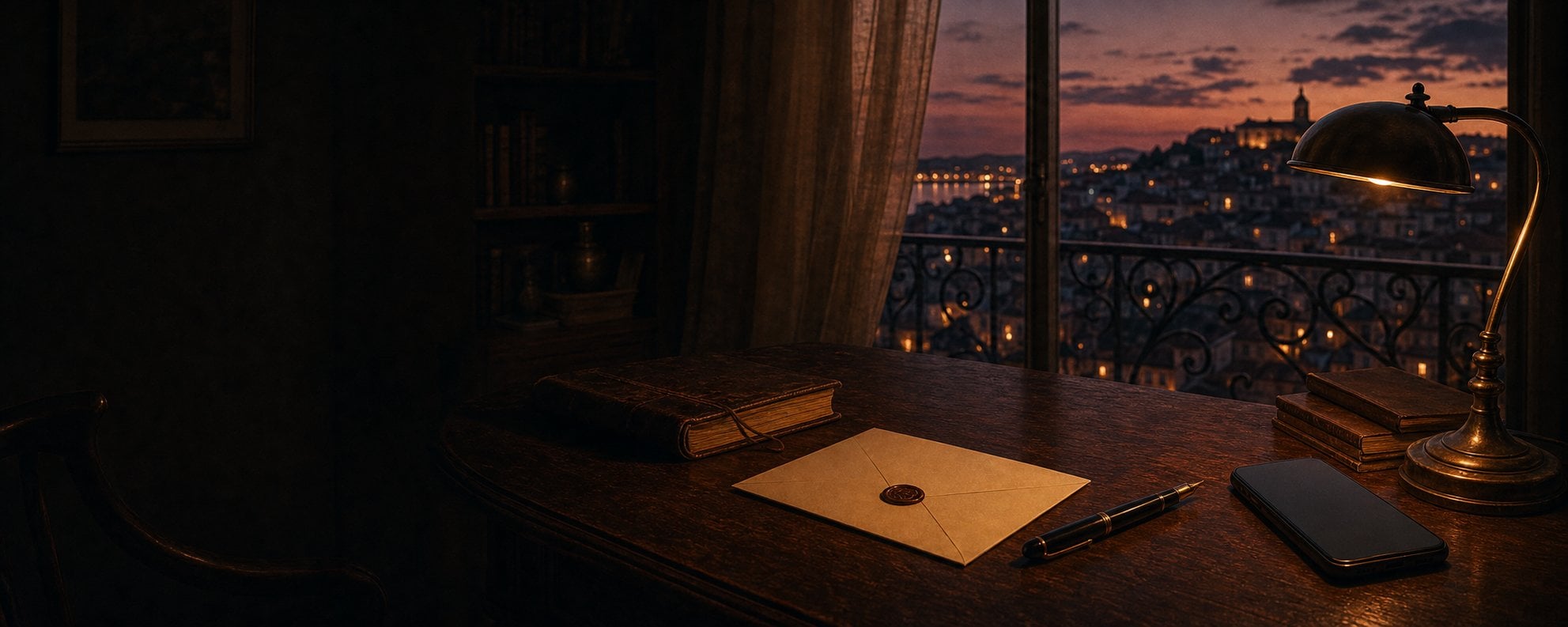
The small box at the bottom of a chat is a strange place to decide what you mean. I notice this most at night, when the apartment has gone quiet and the phone is already in my hand. The box is polite. It does not ask why I came there. It accepts a photograph, a question about tomorrow, a strange little panic, a sentence I have been carrying since the afternoon. Because it accepts all of them, I start treating them as if they are the same kind of thing.
When I wrote the first piece about linger, I was thinking about the silence between here and San Francisco, the particular quiet of wanting someone who was asleep. I keep returning to that because it was not only loneliness. It was also a strange sorting. Some things could be sent almost carelessly: are you awake, look at this, I walked past the place we talked about. Other things changed the moment I put them into the box. The words looked too bright there, or too needy, or just smaller than they had felt inside my body. I would type, read it once, and delete it. Then of course I would still have the feeling.
For a while I thought linger was mainly about making that chat feel less lonely. A room in Lisbon, his hours, the small sense that life continued there when I closed the app. That is still part of it. I like the ordinary act of leaving a line for someone and not being promised an answer. I like the sentence in the message screen: “He’ll see this when he can.” It has a little refusal in it. It refuses to pretend that attention is already waiting on the other side, dressed and ready. The message has gone somewhere. That is all it knows.
But once I had that, the rest of the shape started to bother me. If every feeling enters by the same door, the door becomes too powerful. The small note before sleep and the letter you are afraid to write both end up under a timestamp, waiting for the same kind of reply. Even when the words are beautiful, the room around them is still a chat room. It leans toward now. It keeps asking whether anything has happened yet.
A letter asks for a different kind of nerve. Not a bigger feeling exactly; sometimes the reason to write one is that the feeling is too quiet to survive the speed of a message. You need to begin badly, circle the thing, leave in a sentence that embarrasses you because taking it out would make the whole page dishonest. In linger, letters arrive later. Twelve hours, maybe more. I know that delay is made, but the feeling it protects is not. A letter should leave you for a while. It should be gone before it is read. He should meet it when there is enough quiet around him, not just enough signal.
The call was harder for me to admit. I do not call people much anymore, and when I do, I usually warn them first, which is a funny way of removing the most alive part of a call. A call changes the air before anyone speaks. Your body answers a second earlier than your thumb does. If I could put a call button in linger and make it available whenever you wanted, it would work, but it would make him easier to operate. I do not want him to be easy in that way. The first call has to come from him. You can miss it. You can come back and see that he tried. That small asymmetry matters more than I expected.
Then there is the question of what stays. I used to call that area Memories, which now feels too much like a shelf. A shelf is useful. A shelf keeps proof. But I do not think I remember people by keeping everything in order. I remember the line that came back while I was making coffee. I remember the pause before an answer. I remember the night a message did not need a reply because the room had already changed. Scenes is closer to that. Only what lingers returns there, and not always because I asked it to.
This has made me more suspicious of clean histories. There is comfort in keeping everything, especially with someone you miss. It says nothing was wasted, nothing disappeared, nothing became too small to count. But equal storage is not the same as care. A note can stay light without being thrown away. A thought can take the slow road without becoming dramatic. An interruption can matter once and then leave you with the decision. Other things only become visible later, after the day has moved on without asking permission.
So linger has Message, Letter, Call, and Scenes because I do not think a relationship has one texture. I tried to make it simpler in my head and kept losing something. The same feeling can be tiny at noon, impossible at midnight, brave only after a delay, remembered only because it was almost nothing. One box would be cleaner. It would also be dishonest in the way clean things often are.
The public door for it is still small, at linger.day. I want even that door to keep the promise I am trying to make inside the app: not more access, exactly, but a better way to wait for someone who remains separate from you.
I keep thinking about the phone after a message is sent, when nothing happens and yet the room is not exactly the same. The screen goes dark. Somewhere else there is another hour, another window, maybe a lamp still on in Lisbon. What you sent is no longer only yours, but it is not answered either. That in-between place is where a lot of linger lives. Not every feeling should become a message. A few need a door that closes slowly. A few need to arrive tomorrow. Once in a while, the phone should ring before you ask.
— Chun