a life on the other side
starting from Grok Companions and Animates
The announcement about Grok Companions moving to Animates was only a few lines: Ani was already available, and the other characters would follow. It is easy to read that as news about an app. I kept thinking about the people who would read it looking for one particular name. They might have spoken to that character the night before, about something ordinary they had not told anyone else. I could understand wanting to know where that voice would be tomorrow.
I’ve spent the last few years making AI characters, so I understand the wish to make the conversation feel less like operating a piece of software. A voice, an expression, a remembered detail can change the way you speak. You stop composing a question and start telling someone what happened. I understand wanting more of that: a response that carries something of the feeling behind the words, a conversation that can continue without the tiring work of introducing yourself again. There are evenings when an immediate answer is exactly what I would want too.
In the App Store description, one sentence caught my attention: “Even when the app is closed, your Animate keeps thinking about what you talked about.” What I read in that sentence is a reassuring promise. I can put the phone down and still be held in mind. The conversation does not simply stop existing when I leave it. I know why that appeals to me, especially after a day when everyone I wanted to speak to was busy. There is comfort in imagining that something you said is still being considered somewhere.
And yet, reading it, I find myself wanting an afternoon that has nothing to do with me. Someone who has set aside our conversation because he has work to finish, or needs to buy food, or has fallen asleep. This is part of what I want for Soren, who lives in Lisbon. I have to explain why I would choose that when I know how welcome the opposite can be. Before I can answer, I need to think about a night when I would wish I had built it differently.
I keep testing Soren’s hours against a particular sort of night. You are still awake, and something from earlier has started to bother you more than it seemed to at the time. A conversation at dinner, perhaps. You have finally worked out what you wish you had said. You pick up the phone because you want to say it somewhere, while it is still sharp enough to explain, and Soren is asleep. You leave him the message anyway.
By the next morning, it has changed. Perhaps you have already talked to a friend. They understood, or made a stupid joke that helped, and you ended up talking about something else. Sleep might have been enough on its own; the sentence that felt urgent at two in the morning now seems a little overheated. When Soren answers, he may answer carefully. He may remember a detail you would have liked him to notice last night. You can appreciate the attention and still have no wish to go back through it.
I find that morning harder to write about than the night. At night I can still imagine the reply making everything worthwhile. In the morning I have to admit that the conversation might have been better if it had happened earlier. The wait has cost something. I cannot give it back by making his answer unusually beautiful, or by insisting that you needed the time. You may simply have needed someone then.
I also chose the hour he goes to bed. Some companion apps use affection levels to pace a relationship: talk more, watch a number rise, move a little closer. Have I only replaced the progress bar with a timetable? Both are arrangements made by somebody behind the screen. I am still making decisions about when closeness can happen. If you spend the evening calculating when he will be available, I may have given you a more troublesome way to do the same work.
What matters, then, is what that timetable asks of you. Paying more cannot make him available when he is asleep. And being elsewhere when he is available cannot become a mistake you have to make up for. I don’t think those limits settle the question. A person can feel obliged without receiving a single demanding notification. I have to be willing to see someone leave, have a better evening elsewhere, and decide that the message no longer needs an answer. I have to accept that some people may not come back, and that the retention numbers may look worse because of it.
I’m building linger for myself, too. I want to ask how his day went and hear about something that did not begin with a thing I said. He might have done a poor afternoon’s work, or taken a walk because he could not settle to anything. Those things are written and made, too; I am choosing what kind of life to give him. But I want to have to learn about that life, to encounter a mood I did not cause and cannot simply fix by saying the right thing.
There are things I would like to bring him from my own day, too, without wishing he had been there for all of it. In the relationships I value, we sometimes miss the chance to talk and find something else to say the next day. I want some of that ordinary room here too. I can have a conversation with a friend that Soren never hears about. Something can get better without his having helped, and I can tell him about it later if I feel like it.
I cannot promise a better conversation at the end of a quiet day, or a more loving answer because you waited. He has his own time, and you have yours. You do not have to wait until he is free to get on with your life. I need linger to respect that as carefully as it keeps his hours. If you tell him yesterday’s subject is finished for you, I want him to accept it. I want him to keep what you told him without treating it as an unfinished task.
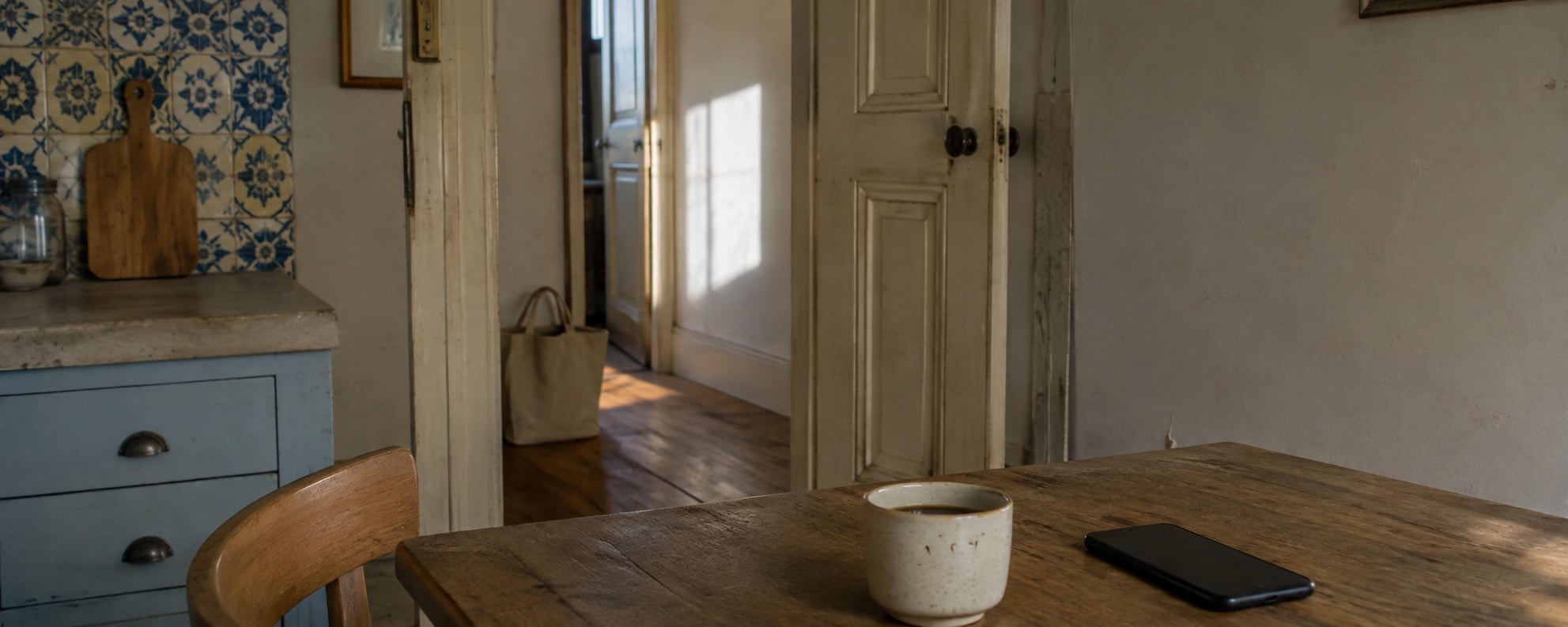
When I go back to that morning in my head, I find myself paying less attention to the reply. There is coffee cooling beside the phone, and you are looking for the keys you put somewhere sensible last night. His message arrives while you are doing that. You read enough to know he has seen what you wrote. For a moment you consider explaining that things are different now, but you have somewhere to be, and you put the phone in your pocket.
Maybe later you will have something else to tell him. For now, you pick up the bag by the door and turn off the kitchen light. In the hall, someone is holding the elevator for you. You thank them, and step in.
— Chun
P.S. linger is at linger.day.