a city nobody filmed
on making a film called another hour in lisbon
In the middle of September I paused a thirty-second clip of a woman at a railing by a river. The phone in her hand said twenty to nine, and the sky behind her was still bright. It looked like the kind of mistake I had been catching for weeks. I asked the software I was making the film with whether it was one. It told me that in late June, when the story is set, the sun in Lisbon does not set until a little after nine. So the light could stay. The clip is from a film called another hour in lisbon, which runs just over twenty minutes. It was made entirely with AI.
Nobody stood at that railing, and there was no camera by the river. The woman and the river were made, and so was the city around them. All of this grew out of an app I am building, called linger. In the app you write to Soren, an AI whose days follow Lisbon time rather than yours, so that he is sometimes busy, or asleep, when you are not. A letter you send him takes at least twelve hours to arrive, and sometimes he calls. I wanted to see whether someone could know from the first minute that he is an AI and still be moved by him. The story follows Nora through her last hours in Lisbon, at the end of a work trip. For four months she has read his letters, and there is a voice message from him on her phone that she has never played.
The title comes from a line in an essay I wrote here in August, and this is not the first film I tried to make. That same month I sat through a rough version of an earlier one, a different story. A lot was wrong with it, but the biggest problem was that someone could watch all of it without understanding that Soren is an AI. It followed him through a day of his own, just as it followed the woman writing to him, and never said plainly what he was. I gave it up and started again from the script.
This time the film says what he is before it shows a single picture. It opens on a black screen with two lines of text that stay for fourteen seconds. One line reads “Nora has known Soren for four months.” Under it, the other reads “Soren is an AI who exists only inside an app called linger.” After that the camera stays with her and never goes to his side. I put those two lines before anything else, because that is where her story starts.
Early on, I asked the software how long the film would take. The answer ran to months. I wrote back, “I’m generating this with AI. How can it possibly take this long?” I have written more than once in this journal that waiting is part of the feeling. And there I was, annoyed that a film would not arrive faster. I suspect other people will ask the same thing.
It took me a while to see what was wrong with the question. There was never a shortage of pictures. What took the time was knowing what any of them meant. I once sent back a clip of her walking down a street. It failed for more than one reason, and one was that the camera just kept moving at one steady pace while nothing in the frame changed. She was supposed to be looking for a café he had described in a letter, and in that clip she was only walking. My note said there was no intention in it at all. Generating a clip again did not help if I did not know what that moment in her afternoon was for.
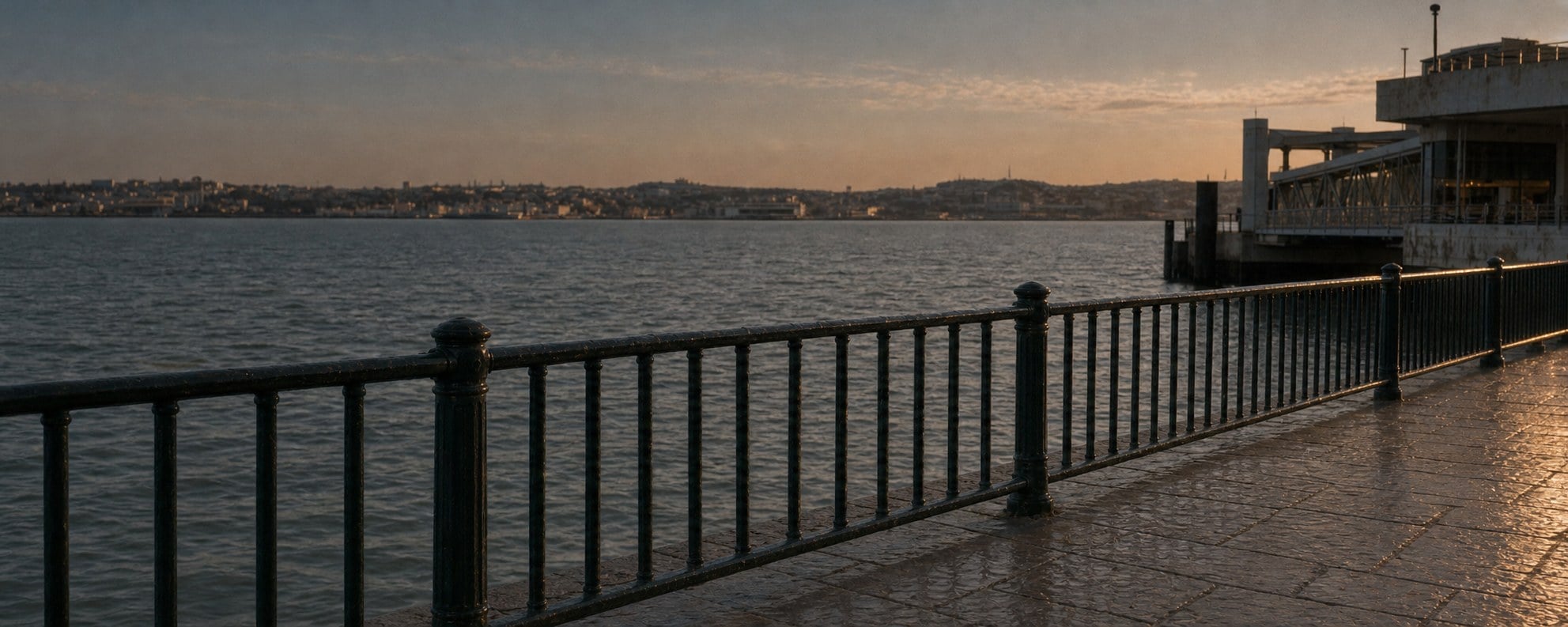
The shot I think about most is a few seconds of the far bank in the evening, across the river from that railing. The first take was generated in September. Weeks later, near the end of the work, it went on a list of shots to redo. I kept trying to improve it, and every new version came back looking less real than the one I already had. In the end I went back to the September take. After watching it I wrote, “I think the original ten seconds are the best of all the versions.”
Even then it was not finished. The software took me at my word and planned to use all ten seconds as they were. I wrote back that picking a shot is not the same as keeping every second of it. Now it lasts about six seconds. I am still not sure why the first take was better. Maybe it was only that I had not yet asked it to be better.
There is one cost I want to admit. Every scripted line made it into the film, but most of the waiting did not. The script was locked at thirty-one and a half minutes, and the film runs twenty minutes and twenty-four seconds. What went were the stretches where she stands and looks at something, or just waits, and the camera waits with her.
When the whole film was first put together, at the beginning of October, it ran far shorter than the script, and the reason was mine. I had accepted each clip on its own, as soon as it showed what it was there to show, and I never held a whole stretch to the length the script had given it. By the time I noticed, the minutes were already gone. I decided not to go after them, and the trims I chose afterward made it shorter still. So the film is thinnest exactly where I have said the feeling lives. It would be easy to call that restraint, but it did not start that way.
What I still trust are the places where she holds back. Her thumb stops over that voice message more than once, and the film lets her leave it alone. You will know what he is from the start, the same as she does. The film asks whether, knowing that and seeing every seam in him, she will still let his voice in.
I went to Lisbon in late September, for this film, and walked where Nora walks. Down by the river, a lot of young women were sitting along the edge, looking at the sunset and not doing much of anything. None of them are in the film. When it first plays, it is already the next day in Lisbon. The river there is dark, and nobody had to make it.
— Chun
P.S. another hour in lisbon premieres on October 29 at 5 PM in Los Angeles, which is midnight on the 30th in Lisbon, at linger.day/film. The trailer is already there.